Coach's Corner: The 7 Best Strength Exercises To Do At 45+
Clif Marshall is D1 Training's Senior Director of Coaching and Pro Training. Each week in D1 Daily, Clif shares his insight gained from more than 20 years working in strength and conditioning.
Editor’s Note: Clif recently had the opportunity to contribute to an “Eat This, Not That” article about strength training for people over 45. What follows is information Clif submitted to the publication’s editors. To read the full article, go here.
After 45, strength training becomes one of the most important investments you can make in your long-term health. Many people focus on cardio or general activity, but resistance training is what truly supports the systems that keep you strong, mobile, and independent as you age.
Why Strength Training Matters After 45
Once we reach our mid-40s, the body naturally begins to lose muscle mass and strength, which happens faster if someone remains inactive. Muscles are metabolically active tissue, meaning they help regulate blood sugar, support hormone balance, and maintain a healthy metabolism. When muscle declines, metabolism slows, and it becomes easier to gain body fat even if your diet and activity levels stay the same.
Bone density also decreases around this time, but resistance training puts healthy stress on bones, stimulating new growth and reducing the risk of arthritis and injuries. Your muscles do not have eyes, so any form of resistance can work for strength training, including bodyweight, resistance bands, dumbbells, kettlebells or barbells. In short, strength training is one of the best ways to fight aging from the inside out.
The 7 Best Strength Exercises to Do After 45
These seven moves target the major muscle groups that support posture, stability, and daily function.
Note: When doing these exercises, it's essential to control the tempo of the exercise for safety and to increase time under tension. At D1 Training, we suggest a tempo of three seconds on the way down, one second on the way up, and a one-second pause at the top of each exercise.
Squats
Targets: Legs, glutes, and core
How to: Stand with feet shoulder-width apart, toes slightly out. Lower your hips as if sitting in a chair, keeping your chest tall and knees behind your toes. Press through your heels to stand back up.
Sets/Reps: 3 sets of 12-15 reps
Why it works: Builds lower-body strength and mobility, helping prevent falls and knee or hip issues.
Push-Ups (or Wall Push-Ups)
Targets: Chest, shoulders, triceps, and core
How to: Begin in a plank position or with hands on a wall or bench. Lower your chest toward the surface, keeping your body in a straight line, then push back up.
Sets/Reps: 3 sets of 10-12 reps
Why it works: Strengthens the upper body and improves shoulder stability and posture.
Glute Bridges
Targets: Glutes, hamstrings, and lower back
How to: Lie on your back, knees bent, feet flat on the floor. Press through your heels to lift your hips until your body forms a straight line from shoulders to knees. Lower slowly.
Sets/Reps: 3 sets of 15 reps
Why it works: Supports lower-back health and hip strength, which supports the development of balance and pain-free movement.
Plank (Modified or Full)
Targets: Core, shoulders, and back
How to: Start on forearms and toes (or knees for a modified version). Keep your body in a straight line, tightening your core. Hold without letting your hips drop.
Sets/Reps: 3 rounds of 20-45 seconds
Why it works: Builds core endurance, which supports posture and reduces the risk of back pain.
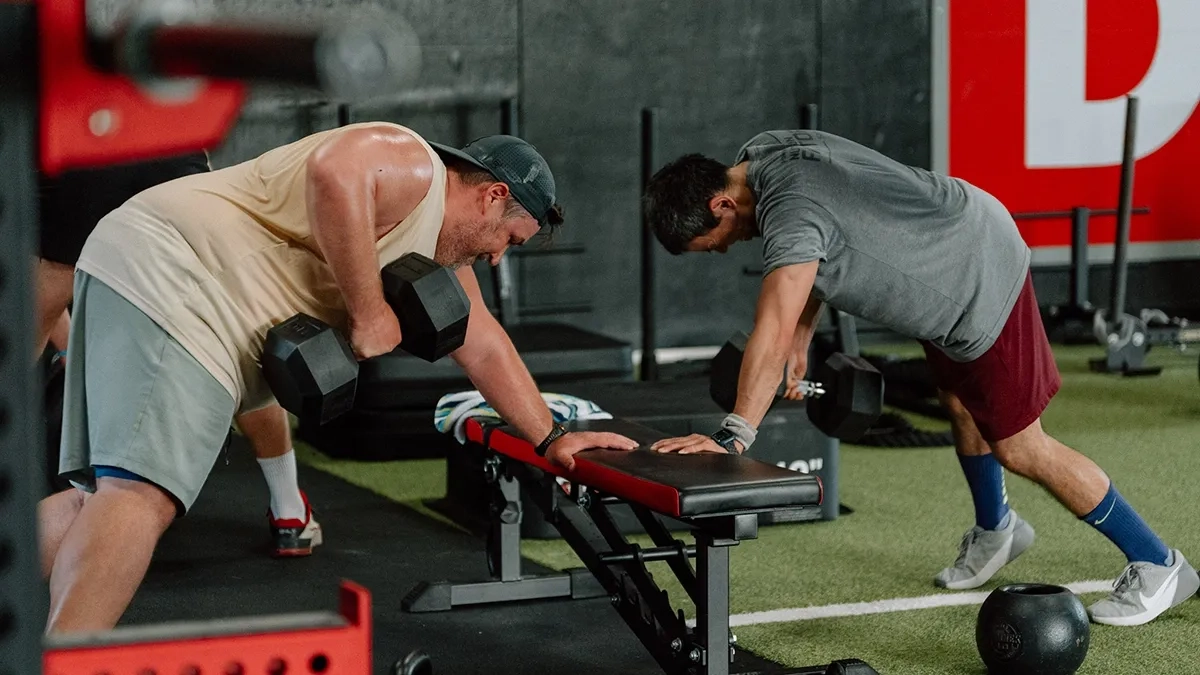
Bent-Over Rows (with Dumbbells or Bands)
Targets: Upper and mid-back, biceps, and shoulders
How to: Hold weights or a resistance band. Hinge forward slightly at the hips, keeping your back straight. Pull weights or band toward your ribs, squeezing shoulder blades together, then lower slowly.
Sets/Reps: 3 sets of 10-12 reps
Why it works: Strengthens the back and counteracts the forward posture common with aging and desk work.
Step-Ups
Targets: Legs, glutes, and core
How to: Step onto a sturdy bench or stair with one foot, press through your heel to lift your body, then step down. Alternate legs.
Sets/Reps: 3 sets of 10 per leg
Why it works: Improves leg strength, balance, and coordination – important for preventing falls.
Dead Bugs
Targets: Deep core muscles and hip flexors
How to: Lie on your back with arms extended toward the ceiling and knees bent at 90 degrees. Lower one arm and the opposite leg toward the floor while keeping your back flat, then return to start. Alternate sides.
Sets/Reps: 3 sets of 10 per side
Why it works: Builds core stability and strengthens the muscles that protect the spine.
Bottom Line
After 45, it’s smart to focus first on moving with purpose, maintaining balance, and building a foundation of strength before using heavier weights. Once form and stability are solid, gradually increasing resistance will deliver even greater benefits. A balanced routine that works all major muscle groups two to three times per week can help preserve muscle mass, protect bone health, and keep metabolism steady. Strength training truly is one of the best ways to stay strong, capable, and youthful for years to come.