Coach's Corner: The D1 Training Guide On How To Boost VO2 Max For Older Athletes | D1 Daily
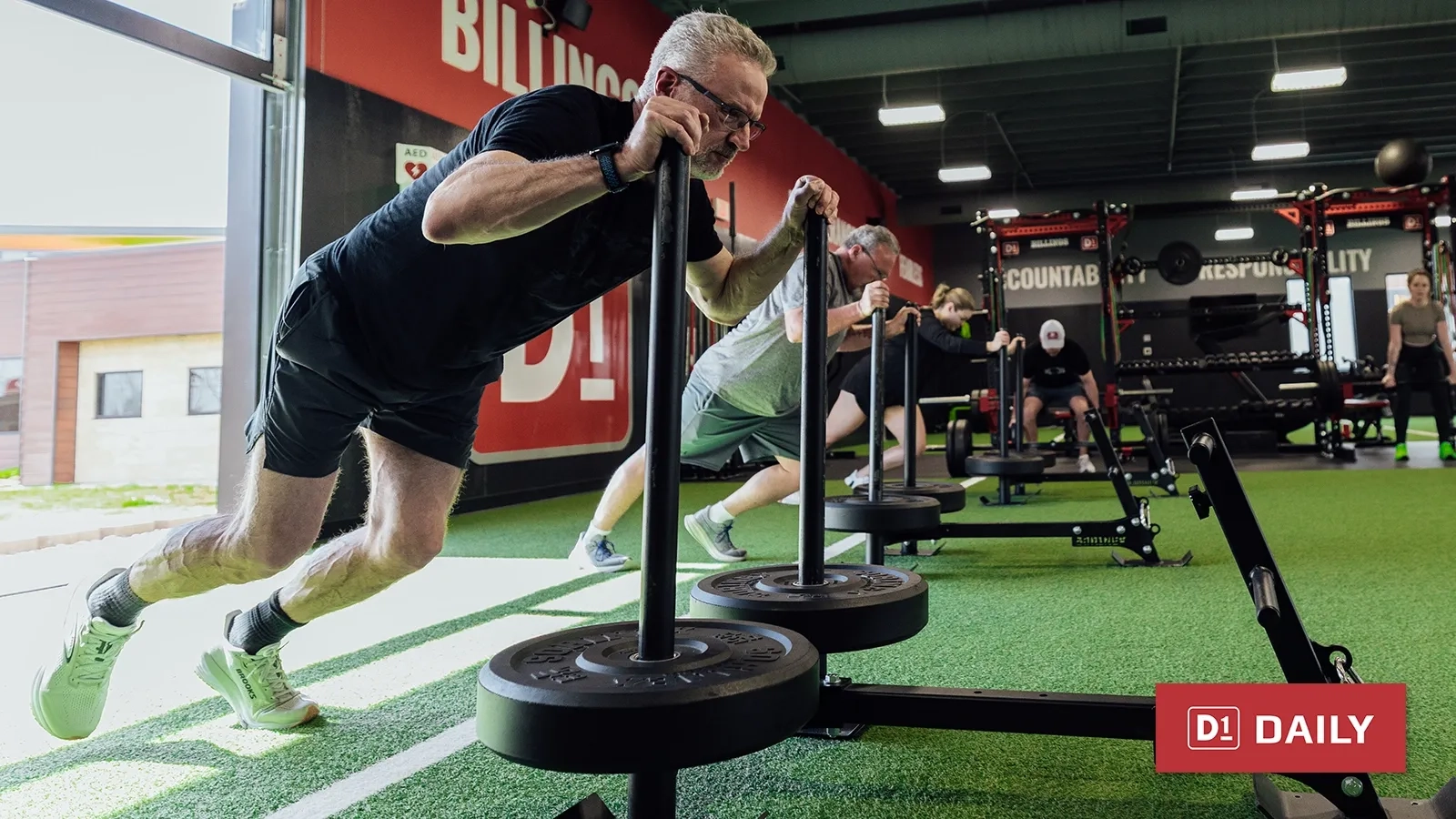
Jeff Fish is D1 Training's Senior Director of Coaching. In the Coach's Corner, Jeff shares his insight gained from more than 30 years working in strength and conditioning.
Editor’s Note: Jeff recently had the opportunity to contribute to a Men's Journal article about boosting VO2 max for people over 50. What follows is information Jeff submitted to the publication’s editors. To read the full article, go here.
1. What does an ideal VO2 max look like for men in their 50s–60s?
VO2 max is the maximum rate of oxygen your body can transport and use during intense exercise. It’s one of the most reliable markers we have for cardiovascular fitness, longevity, and endurance capacity — and for men in their 50s and 60s, it becomes one of the most important numbers you’re not tracking. An ideal VO2 max for men in this age range typically falls in the 40–45 mL/kg/min range, though that number is shaped by the aerobic work you do and how you live day to day.
In my work with professional athletes, VO2 max was a key data point not just for performance but also for predicting how long a player could sustain elite output across a career. For men in their 50s and 60s, the stakes are different but the principle is the same: your cardiovascular engine is either being maintained or it’s declining. The goal isn’t to hit a specific number. It’s to trend in the right direction before the gap becomes harder to close.
2. An approachable workout built for men in this age range.
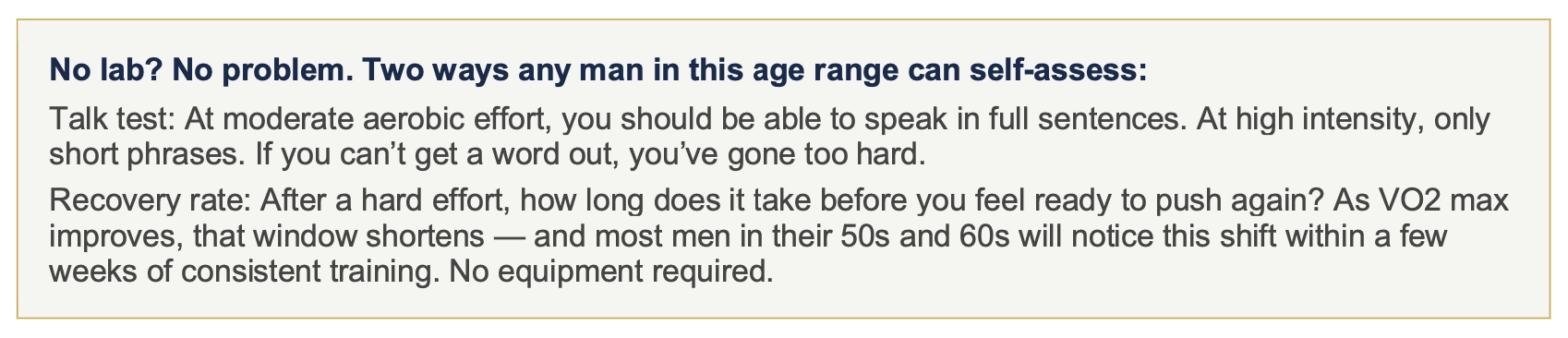
Men in their 50s and 60s looking to improve VO2 max should be using interval training — not all-out sprints, but controlled aerobic pushes that challenge the cardiovascular system without punishing joints that have already logged a lot of miles. My go-to recommendation for this population is the 3-3-3 rule: a 30-minute session alternating 3 minutes of high-intensity effort with 3 minutes of low-intensity recovery, repeated 5 times. This structure works on a bike, rower, incline treadmill, or walking track — whatever is accessible and comfortable for your body.
On a rower or bike, adjust resistance to control intensity. On an incline treadmill, grade is your lever — raise it for the work interval, lower it for recovery. Men in this age range get better results from sustainable intensity than from going all-out and needing three days to recover.

3. Why this method works specifically for men in their 50s and 60s.
Interval training works for men in this age range because it directly targets the system that declines fastest with age — in a format the body can actually handle. After 50, men experience a measurable drop in cardiovascular efficiency alongside natural muscle loss. Steady-state cardio at a moderate pace helps maintain what you have. Interval work — short, controlled bursts followed by structured recovery — pushes your heart and lungs to adapt, preserves lean muscle, and improves how your body processes oxygen and fuel.
What’s less discussed is the nervous system dimension, and this is where age really matters. After 60, a man’s tolerance for sustained intensity drops not just muscularly but also neurologically. The brain and body both need more time to recover from high-demand efforts than they did at 35 or 40. Interval structure respects that biology. Short work bouts followed by real recovery periods let the nervous system reset between efforts, which means more quality work per session and more complete recovery afterward, compared to grinding through continuous high-effort cardio.
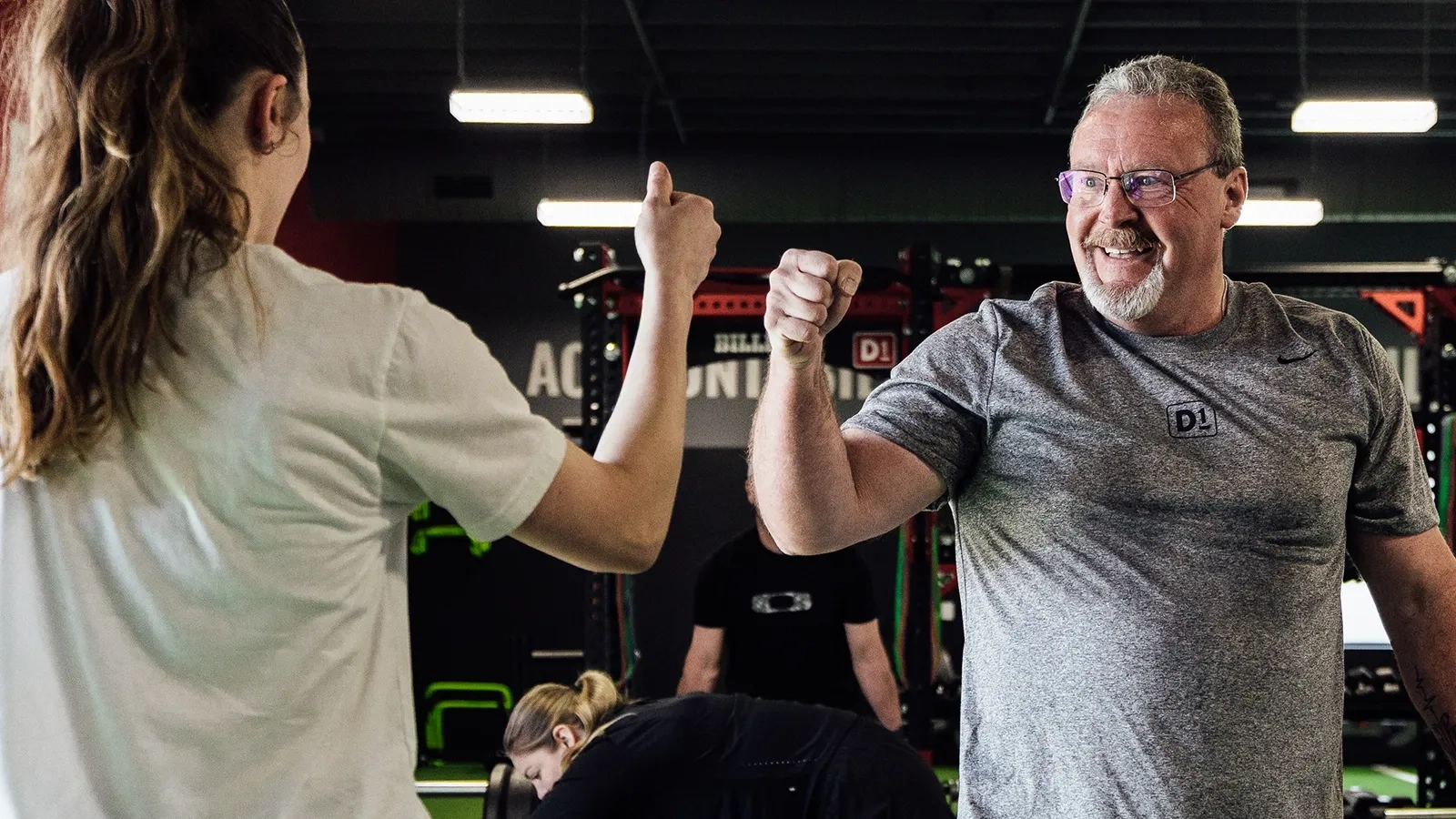
I’ve applied this framework with aging professional athletes for years. The principle scales directly to any man in his 50s or 60s who wants to protect his cardiovascular health without wrecking his joints in the process. High return. Low damage. That’s the target.
4. How long before men in this age range see real results?
Most men notice meaningful improvements in cardiovascular fitness within four to six weeks of consistent interval training. One to two sessions per week is enough, especially when paired with regular strength training and daily movement. For men in their 50s and 60s, more is rarely better. Quality and recovery between sessions matter more than frequency, and the body at this stage responds better to intelligent stress than to volume.
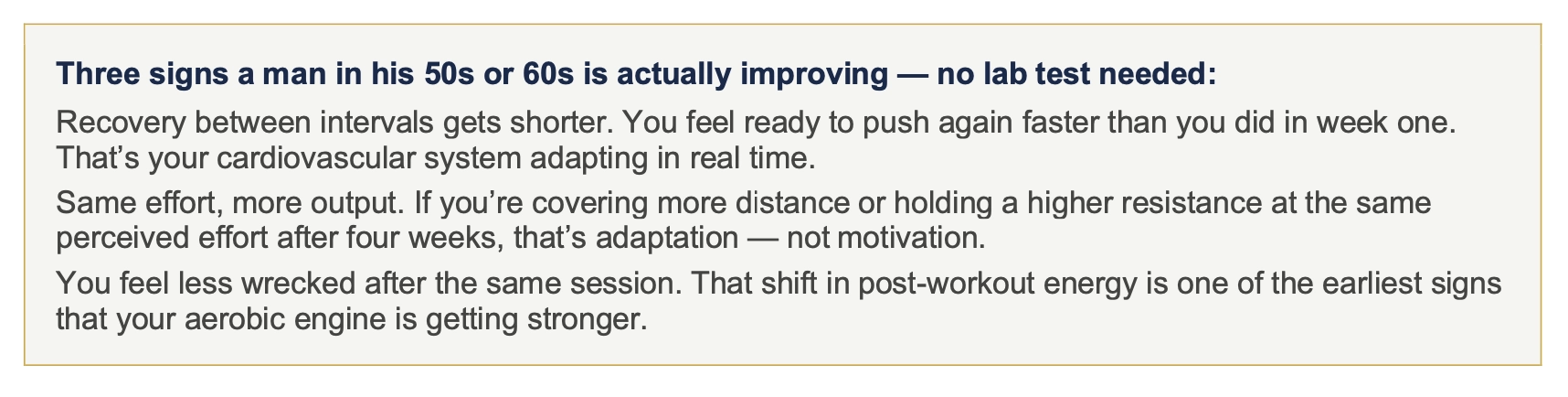
This isn’t about a quick fix. It’s about building a system that keeps working for you, one that respects where your body is now and builds toward where you want it to be.

D1 Training is built for the Everyday Athlete—no matter your age or fitness level. Whether you’re looking for personalized coaching through personal training, the energy and accountability of a group fitness class, or a variety of high-impact fitness classes, our expert coaches are here to help you reach your goals. D1 also specializes in youth strength and conditioning, developing young athletes with age-appropriate programming that builds confidence, strength, and long-term success. Wherever you are in your fitness journey, D1 is the place to train.