How D1 Bellaire's Hans Straub Brings College Training Ideals to Youth Athletes | D1 Daily
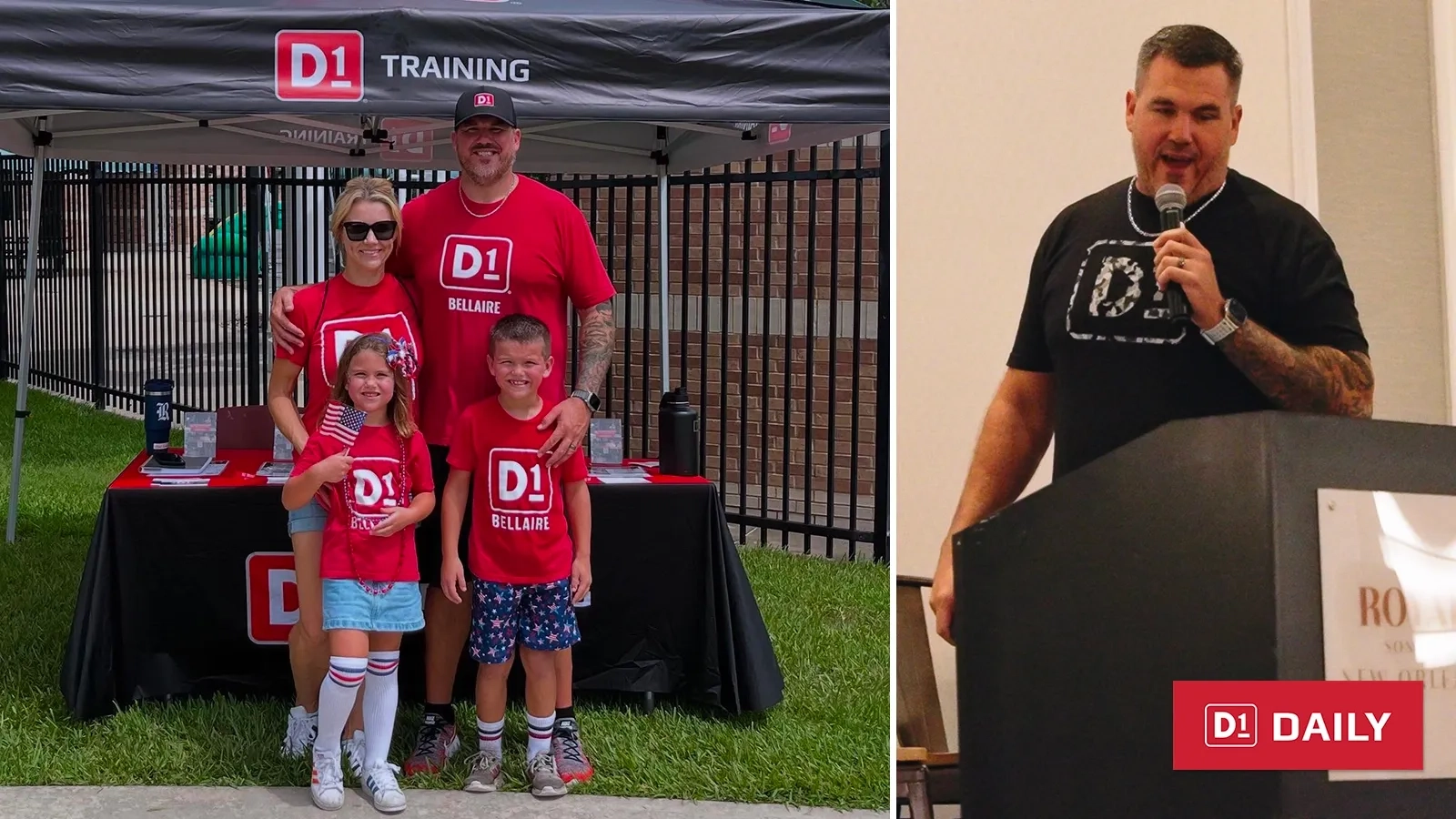
As a leader in the fitness industry, D1 Training has always prided itself on bringing the collegiate-level experience to the general public. No one embodies this mission better than Hans Straub, the owner of D1 Training Bellaire in Texas.
With over 22 years of experience at the highest levels of collegiate athletics—including stops at Stanford, Rice, and the University of South Florida—Hans has seen what it takes to build a champion. Recently at the 2026 D1 Coaches Summit in New Orleans, he shared a presentation titled "From Division I to Youth Athletic Development," outlining how he is adapting elite-level systems for the next generation of athletes.
Here is a breakdown of that philosophy:
From the Big Stages to the Starting Line: Bridging the Gap
The transition from a Division I weight room to a local youth training facility isn't just about scaling down weights; it’s about a fundamental shift in philosophy. While collegiate programs focus on "peaking" an athlete for competition, youth development is about building the "biological foundation."
1. The Long-Term Athlete Development Approach
Hans emphasizes that youth athletes are not just "mini-adults." They require a structured pathway that respects their biological age, not just their chronological age. D1 uses three distinct scholastic stages to ensure every athlete is training at their appropriate level:
Rookie (Ages 7–11): The focus is on physical literacy—learning how to run, jump, land, and move with coordination.
Developmental (Ages 12–14): This stage introduces age-appropriate resistance training and builds the base level of strength needed for puberty.
Prep (Ages 15–18): This is where collegiate-style programming truly begins, mirroring a D1 environment to prepare them for the demands of high school and college sports.
2. Movement First, Intensity Second
One of the core adaptations Hans brought from Stanford and Rice is the emphasis on functional movement. In the D1 world, we don’t just care if you finished the rep; we care how you moved.
"If you can't move well, you can't play well," Hans notes. By identifying movement dysfunctions early, we can prevent the overuse injuries and burnout that often derail promising young careers.
A Look Inside a Periodized Program: The 7-Week Athlete Blueprint
To understand how elite collegiate systems are integrated at the youth and prep levels, Straub presented his specialized, 7-week periodized training program. Developed for youth athletes at D1 Bellaire, this protocol breaks down a 3-to-4 session-per-week schedule into deliberate, progressive phases focusing on linear, lateral, and multi-directional mastery:
Weeks 1–2: Foundation Phase — Every great athlete starts with the basics. The initial weeks focus heavily on movement preparation protocols, introducing foundational plyometrics, and building straight-line linear speed.
Week 3: Development Phase — Once the baseline is established, the intensity steps up. This phase introduces combined day programming, weighted plyometrics to build explosive power, and Change of Direction (COD) drills.
Week 4: Position Integration — True athleticism requires sport-specific mechanics. Here, coaches integrate hurdle and bag drills, offensive line rotations (or sport-equivalent tracking), and hyper-focused technique work.
Weeks 5–6: Peak Performance — This is where we build the "engine" and top-tier output. Training shifts to timed sprints, rapid-response plyometrics, and heavy sled-push conditioning to maximize power and stamina.
Week 7: Final Phase & Testing — The program concludes with advanced reactive plyometrics and multi-directional speed work, culminating in peak testing so athletes can visually track their data, growth, and performance gains.
More Than Just a Gym: Character and Community
The most profound shift from the D1 collegiate world to D1 Training facilities is the focus on holistic growth. In a college weight room, the culture is already set. In youth development, we are the ones setting it.
Hans and his wife Jennifer are raising two young athletes of their own, and they’ve built D1 Bellaire to be a place where character is the top priority. The program emphasizes four core principles:
- Athleticism: Moving with purpose and skill.
- Discipline: Doing the work when no one is watching.
- Consistency: Showing up and putting in the reps.
- Confidence: The result of knowing you are prepared.
“We aren't just building faster football players or stronger volleyball players," Straub said. "We are building confident, resilient kids who carry these lessons into the classroom and their future careers. We train the athlete in front of us, regardless of their starting point.”

D1 Training is built for the Everyday Athlete—no matter your age or fitness level. Whether you’re looking for personalized coaching through personal training, the energy and accountability of a group fitness class, or a variety of high-impact fitness classes, our expert coaches are here to help you reach your goals. D1 also specializes in youth strength and conditioning, developing young athletes with age-appropriate programming that builds confidence, strength, and long-term success. Wherever you are in your fitness journey, D1 is the place to train.
Related Articles
D1 Arlington Coach Helps NFL Vet LaBryan Ray Train, Prepare for Panthers Training Camp | D1 Daily
D1 Training Launches D1 Verified To Bring Trusted Performance Testing To Athletes Nationwide