Fuel For Performance: D1 Expert Shares 4 Principles To Eat Like Athlete You Want To Be | D1 Daily
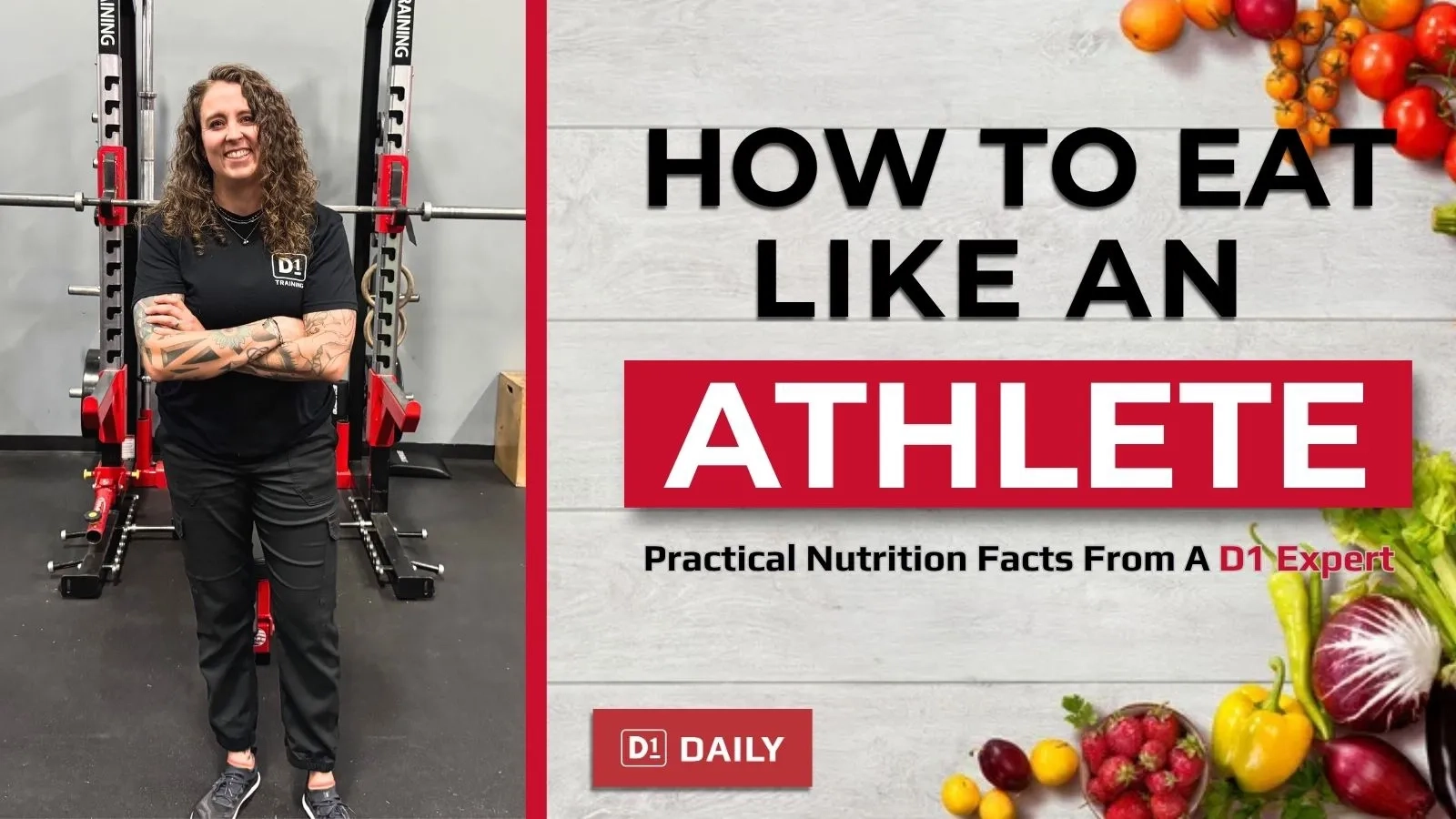
Athletic success is fueled by the choices athletes make every day, not just with how they train, but also what they are putting into their body. While training develops strength, speed, and endurance, proper fueling provides the foundation for athletes to perform at the highest level.
Sara Kettelkamp, a former NCAA Division II athlete, member of D1 Training’s National Training Panel, and Co-Owner and Head Strength Coach at D1 Training Colorado Springs, has dedicated her career to understanding how the body develops, adapts, and recovers. Sara holds a Master’s degree in Exercise Science, and elite certifications including CSCS, RSCC, and a USAW-L1. She uses all of these to help athletes maximize their potential both inside and outside the gym.
Through her countless hours of studying exactly how the human body performs, she has developed 4 practical principles for elite athletic nutrition. (Editor's note: Sara recently presented this information to D1's Summer Athlete Program.)
Principle 1 - The Golden Rule: Just Eat!
Before worrying about calorie counting or macro tracking, Kettelkamp emphasizes one simple principle that most athletes forget: athletes need to eat.
Many athletes end up skipping meals because they are concerned with finding what the healthiest option truly is, or their schedule is pulling them between school, practice, and social activities. However, failing to properly fuel your body can have significant consequences. Without enough calories, your metabolism slows, recovery suffers, and performance declines.
Oftentimes finding the “perfect meal” is less important than simply getting fuel in your system. When an athlete's training volume is high, eating something is always better than eating nothing.
Principle 2 - Don’t Vilify Carbs
In today’s fitness environment, protein gets a lot of attention. While protein plays a crucial role in muscle repair and recovery, Kettelkamp reminds us that carbohydrates are our body's main source of energy.
For athletes who are participating in high-intensity training, carbs should make up 40-60% of their daily nutrition. Carbs are what provides your body with the quick, accessible fuel needed for explosive movements and high-intensity training.
Carbs are a key performance tool for athletes to gain energy in order to crush their workouts, while protein helps repair and rebuild muscles once the work is done.
READ: Coach's Corner: How to Help Your Athlete Gain Weight the Healthy Way
Principle 3 - Master Your Pre- and Post-Workout Windows
Kettelkamp also puts an emphasis on nutritional timing, and how that can make a significant impact in your performance and recovery.
For pre-workout fuel, Kettelkamp recommends eating a balanced meal three to four hours before training. If an athlete is in need of a quicker energy boost closer to training (2 hours or less), she recommends a simple, easily digestible carb heavy snack that can provide an energy boost without upsetting the stomach. One of her favorite grab-and-go options when she can’t have a full meal is an applesauce pouch. She tries to avoid heavy fiber and dairy products before workouts as well.
Post-workout nutrition is equally important as well, as your body needs to replenish in order to kickstart the recovery process. Within 30-45 minutes of finishing your workout, Kettelkamp recommends that athletes consume a balanced snack that includes both carbohydrates and protein. A high-quality protein bar, or even a classic glass of chocolate milk helps replenish energy and jumpstart the muscle rebuilding process.
Principle 4 - The 80/20 Rule
Elite performance and nutrition does not require perfection. Instead Kettelkamp recommends athletes to follow the 80/20 rule.
Focus on quality nutrition, clean hydration, and balanced meals 80% of the time, while letting the other 20% accommodate for real life. Whether it’s enjoying a meal out with friends, or grabbing a meal with teammates, occasional indulgences are part of a healthy sustainable lifestyle.
The goal is consistency, not perfection.
Kettelkamp encourages athletes to start small. Rather than completely overhauling their diet and routine overnight, she encourages them to focus on establishing one small habit per week. Whether it's drinking a glass of water each day, consistently having breakfast, or ensuring they have a recovery snack after training, establishing those small actions consistently often lead to the biggest results over time.

D1 Training is built for the Everyday Athlete—no matter your age or fitness level. Whether you’re looking for personalized coaching through personal training, the energy and accountability of a group fitness class, or a variety of high-impact fitness classes, our expert coaches are here to help you reach your goals. D1 also specializes in youth strength and conditioning, developing young athletes with age-appropriate programming that builds confidence, strength, and long-term success. Wherever you are in your fitness journey, D1 is the place to train.
Related Articles

How D1 Training Coach Corey McDonald Shapes The Future of Chattanooga Athletes | D1 Daily
Baker Mayfield Pays It Forward With High-Energy D1 Youth Camp At Buccaneers Facility | D1 Daily